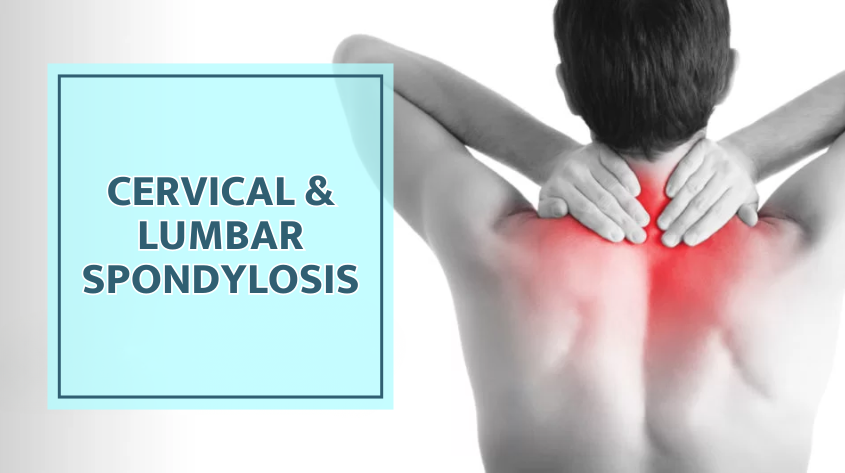
Cervical & Lumbar Spondylosis
Cervical & Lumbar Spondylosis — Comprehensive Care by Dr. Chirag Gupta
Cervical and lumbar spondylosis are common age-related changes of the spine that can cause pain, stiffness, numbness, weakness and a drop in quality of life. At Dr. Chirag Gupta’s clinic, we treat each patient as a whole person — not just an X-ray — combining modern diagnostics, evidence-based therapies, and personalised rehabilitation plans so you regain function, confidence, and comfort.
What is spondylosis? (Simple, real explanation)
Spondylosis is the medical term for the wear-and-tear changes that occur in the spine over time.
- Cervical spondylosis affects the neck (C1–C7) and can compress nerves or the spinal cord, producing neck pain, arm pain, tingling, or even balance problems.
- Lumbar spondylosis affects the lower back (L1–L5/S1) and commonly causes low back pain, sciatica (pain radiating down the leg), numbness or difficulty walking for long distances.
These changes may include disc degeneration, bone spur formation (osteophytes), facet joint arthritis, and ligament thickening. Not everyone with imaging changes has symptoms — our goal is to treat the person, not just the scan.
Who gets it and why?
Although more common with age, spondylosis isn’t only a “elderly” problem. Risk factors include:
- Natural aging and disc dehydration
- Repetitive strain (manual labour, long driving)
- Poor posture and sedentary lifestyle
- Previous spine injuries
- Genetic predisposition
- Smoking and obesity, which accelerate degeneration
Early attention preserves mobility and prevents chronic pain cycles.
Symptoms to watch for
Symptoms vary depending on the level and severity of the problem:
- Persistent neck or low-back pain and stiffness
- Pain that radiates to the shoulder, arm, buttock or leg
- Numbness, tingling, or weakness in the arms or legs
- Loss of fine motor skills (in cervical myelopathy) or balance problems
- Pain that worsens with prolonged sitting, standing, bending or certain movements
If you experience sudden severe weakness, bowel/bladder loss, or rapidly progressive neurological symptoms, seek urgent care.
How we diagnose (thorough, not rushed)
At Dr. Gupta’s clinic we follow a methodical approach:
- Detailed clinical evaluation — history, activity assessment, neurological exam.
- Targeted imaging — X-rays for alignment and bone changes; MRI for disc, nerve and spinal cord assessment; CT or dynamic flexion/extension films when needed.
- Electrodiagnostics (EMG/NCS) if nerve root vs peripheral nerve problems are unclear.
- Functional assessment — gait, balance, posture and activities of daily living to personalise rehab.
We explain findings in plain language and jointly choose the best path forward.
Treatment — personalised, stepwise, and conservative-first
Our philosophy: start with the least invasive, most effective options and escalate only when necessary.
Non-surgical (first line)
- Lifestyle & education — posture training, work station ergonomics, weight management.
- Physiotherapy — tailored programs for core stability, cervical strengthening, flexibility and balance.
- Pain relief — acetaminophen/NSAIDs as appropriate, short courses of muscle relaxants, topical agents.
- Interventional pain procedures — image-guided epidural steroid injections, facet joint injections or medial branch blocks for diagnostic and therapeutic benefit.
- Spine-preservation strategies — activity modification and graded return to work/sport.
Many patients achieve substantial relief and long-term improvement with a well-structured conservative plan.
When surgery is considered
Surgery may be recommended if:
- Progressive neurological deficit (weakness, loss of coordination)
- Severe, persistent pain unresponsive to conservative care
- Spinal instability or significant cord compression on imaging
Surgical options are chosen to match the problem — from minimally invasive discectomy, decompression and stabilization procedures, to fusion when needed. Our surgical approach prioritises preserving motion when safe and reducing recovery time.
Rehabilitation & long-term care
Recovery doesn’t end after a procedure. Dr. Gupta’s team provides:
- Structured post-op physiotherapy and functional retraining
- Return-to-work planning and ergonomic counselling
- Ongoing maintenance programs to reduce recurrence risk
We measure outcomes and adjust plans so gains are lasting.
Why choose Dr. Chirag Gupta?
- Patient-first care: clear explanations, shared decision-making, and realistic goal setting.
- Multidisciplinary coordination: physiotherapists, pain specialists and imaging services work together for fast, accurate care.
- Evidence-based, modern techniques: from targeted injections to minimally invasive surgery when indicated.
- Focus on function: not just pain scores — we help you get back to the activities that matter.
- Compassion and accessibility: follow-up and rehabilitation are planned before treatment begins.
Patient journey — what to expect
- Book a consultation — bring previous reports or scans if available.
- Comprehensive assessment and personalised plan.
- Begin conservative care (most patients start here).
- Reassess at defined intervals — escalate to injections or surgery only if needed.
- Structured rehabilitation and long-term maintenance.
Clear communication and realistic timelines keep you in control every step of the way.
FAQs (short)
Is spondylosis curable? Degeneration can’t be reversed, but symptoms are highly manageable and many patients return to normal life with the right plan.
Will I need surgery? Most patients do not. Surgery is reserved for selected cases after full conservative therapy.
How long to recover? Recovery varies — weeks to months depending on the treatment. Rehabilitation speeds and sustains recovery.