
Lumbar Spondylosis vs Sciatica: What Is the Real Difference?
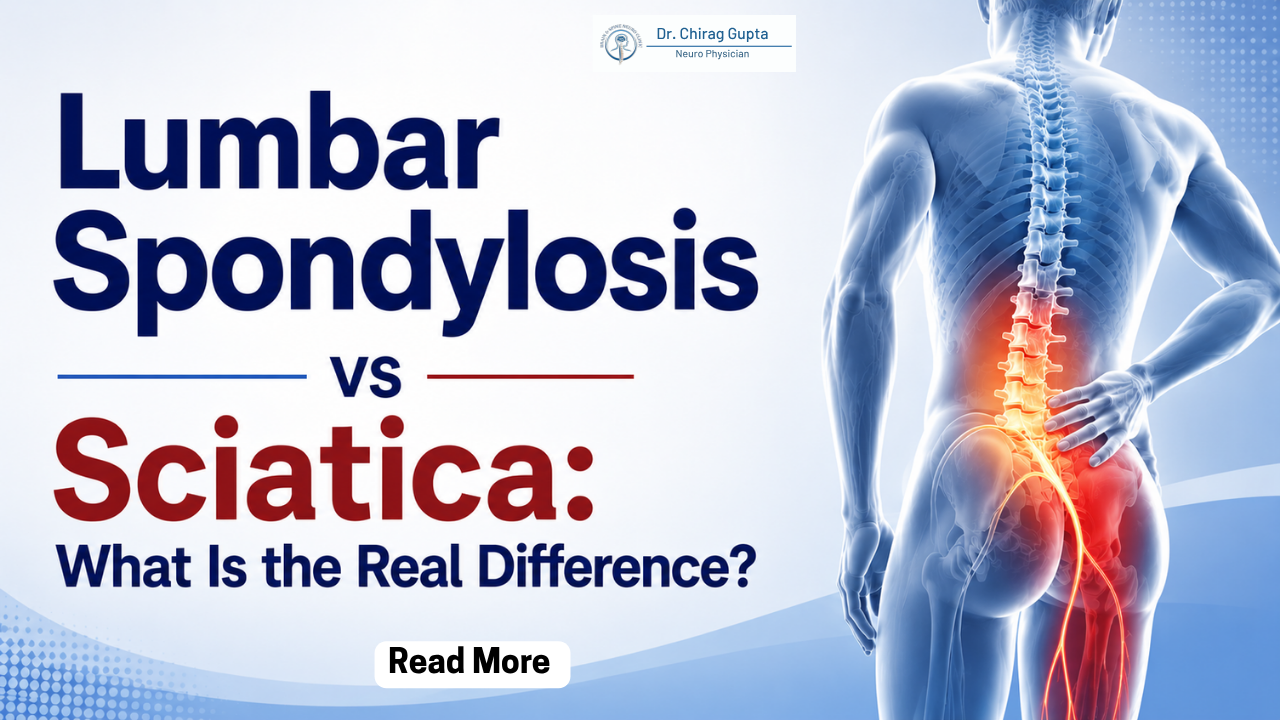
If you've been dealing with nagging lower back pain that sometimes shoots down your leg, chances are you've already searched the internet and landed on two confusing terms: lumbar spondylosis and sciatica. People often use them interchangeably, but they aren't actually the same condition — and knowing the difference can save you months of misdirected treatment.
Let's break it down in plain language, the way a doctor would explain it to you across a table, not in a textbook.
What Is Lumbar Spondylosis?
Lumbar spondylosis is essentially age-related wear and tear of the lower spine. Over the years, the discs between your vertebrae lose water content and cushioning, the joints develop small bony growths (called osteophytes), and the overall structure of the spine becomes stiffer and less flexible.
Think of it like the natural wearing down of a well-used hinge — it doesn't happen overnight, and it doesn't always cause pain either. Many people in their 40s, 50s, and beyond have some degree of spondylosis on an X-ray or MRI without even knowing it, because it's silent until it starts pressing on nearby nerves or causing stiffness.
Common symptoms of lumbar spondylosis:
Stiffness in the lower back, especially in the morning
Dull, aching pain that worsens with prolonged sitting or standing
Reduced flexibility when bending or twisting
Pain that improves with gentle movement but returns with rest
What Is Sciatica?
Sciatica isn't a disease in itself — it's a symptom. It refers to pain that travels along the path of the sciatic nerve, which runs from your lower back, through your hips and buttocks, and down each leg. When something compresses or irritates this nerve, you feel a sharp, shooting, sometimes burning pain that can travel all the way to your foot.
Common symptoms of sciatica:
Sharp or burning pain radiating from the lower back down one leg
Numbness, tingling, or a "pins and needles" sensation in the leg or foot
Pain that worsens with sitting, coughing, or sneezing
Weakness in the affected leg in more severe cases
So, How Are They Connected?
Here's where the confusion usually starts. Lumbar spondylosis can actually cause sciatica. When the bony growths or a bulging disc from spondylosis press against the sciatic nerve root, it triggers that classic shooting leg pain we call sciatica. So spondylosis is often the underlying cause, while sciatica is the resulting nerve pain.
But sciatica can also happen without spondylosis — for example, from a slipped disc, muscle spasm, or even prolonged sitting habits, especially in younger people. This is exactly why self-diagnosing from Google symptoms often leads people down the wrong treatment path, and why an actual clinical evaluation matters so much.
Key Differences at a Glance
Nature of pain: Spondylosis usually causes a dull, stiff ache localized to the back. Sciatica causes sharp, radiating pain down the leg.
Location: Spondylosis stays mostly in the lower back. Sciatica travels beyond the back into the hip, thigh, and leg.
Cause: Spondylosis is degenerative and age-related. Sciatica is a nerve compression symptom that can stem from multiple causes, including spondylosis itself.
Sensation: Spondylosis rarely causes numbness or tingling. Sciatica commonly does.
Why Getting the Right Diagnosis Matters
Treating sciatica like ordinary back pain — or treating spondylosis without checking for nerve involvement — often leads to slow recovery and repeated flare-ups. A proper neurological examination, sometimes paired with imaging like an MRI, helps pinpoint exactly which nerve is affected and how severely.
This is why many patients experiencing persistent leg pain along with back stiffness eventually consult the Best Neurologist in Greater Noida. Rather than continuing to rely on painkillers alone. A specialist can distinguish between simple muscular pain, spondylosis-related stiffness, and true nerve compression causing sciatica — and each of these needs a different treatment approach entirely.
How These Conditions Are Usually Treated
For lumbar spondylosis:
Physiotherapy and targeted stretching to maintain spinal flexibility
Anti-inflammatory medication for flare-ups
Posture correction and ergonomic adjustments
Weight management to reduce load on the spine
For sciatica:
Rest combined with gentle, guided movement (not complete bed rest)
Nerve pain-specific medication when needed
Physiotherapy focused on nerve gliding exercises
In select severe cases, epidural injections or surgical evaluation
Because the line between the two conditions can blur so easily, self-treating for months without a professional opinion often does more harm than good. Consulting the Best Neurologist in Greater Noida early on can help you avoid unnecessary suffering and get a treatment plan built around your actual condition, not just your symptoms.
When Should You Worry?
Most back pain resolves with rest and simple care, but certain signs mean it's time to see a specialist without delay:
Pain lasting more than 4–6 weeks despite home care
Numbness or weakness in the leg or foot
Loss of bladder or bowel control (a medical emergency)
Pain that disrupts sleep or daily function
If you notice any of these, it's best to consult the Best Neurologist in Greater Noida promptly rather than waiting it out, since early intervention often prevents the condition from progressing further.
The Bottom Line
Lumbar spondylosis and sciatica are related but distinct — one describes spinal wear and tear, while the other describes nerve pain that can result from it. Understanding this difference helps you seek the right treatment instead of guessing your way through months of discomfort. If your back and leg pain isn't improving, don't hesitate to consult the Best Neurologist in Greater Noida. For a proper diagnosis and a treatment plan tailored to what's actually going on in your spine.
FAQs
1. Can lumbar spondylosis cause sciatica?
Yes, when it presses on the sciatic nerve root, it can trigger sciatica.
2. Is sciatica always caused by spondylosis?
No, it can also result from slipped discs, spasms, or prolonged sitting.
3. How long does sciatica usually last?
Mild cases often improve in 4–6 weeks with proper care.
4. Is surgery required for spondylosis?
Rarely — most cases are managed with physiotherapy and medication.
5. When should I see a neurologist for back pain?
If pain persists beyond a few weeks or comes with numbness or weakness.